Combatives
Hand-to-hand combat systems for military and law enforcement.
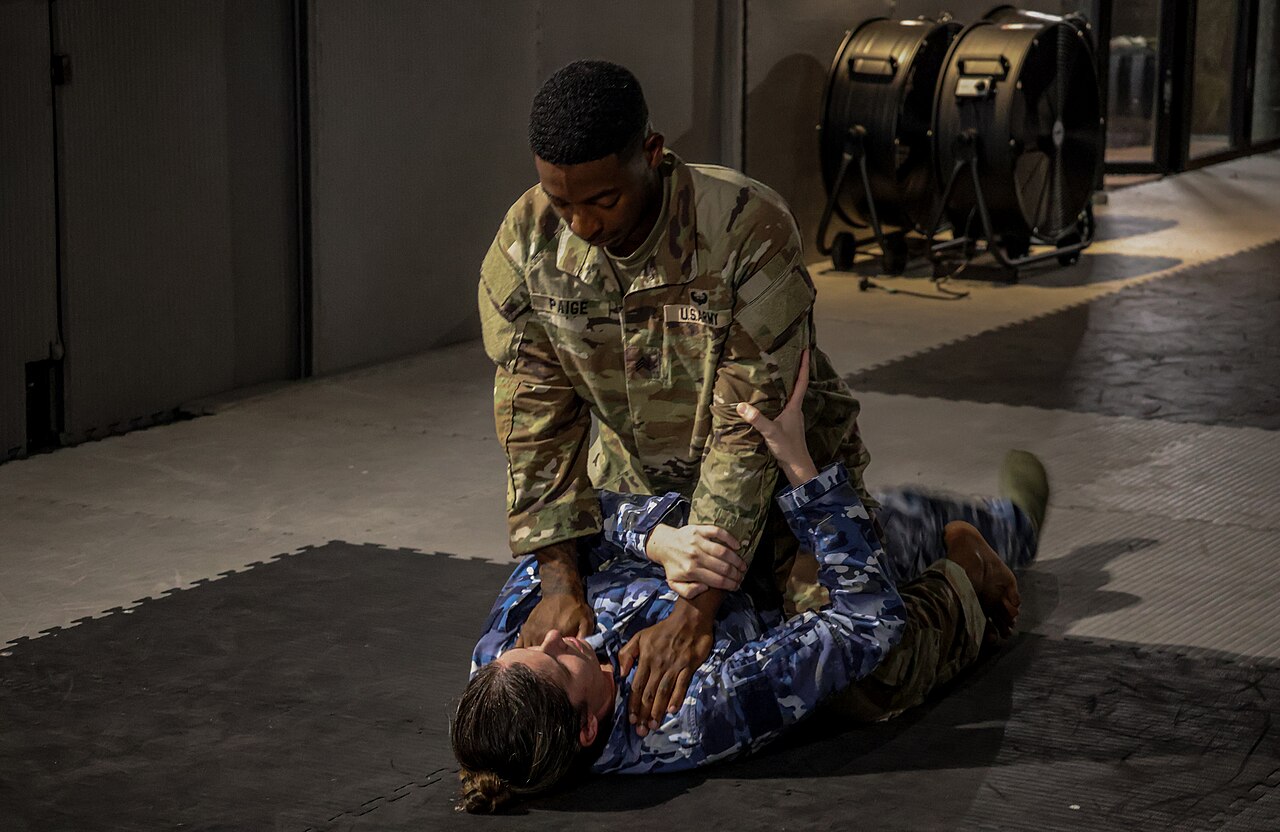
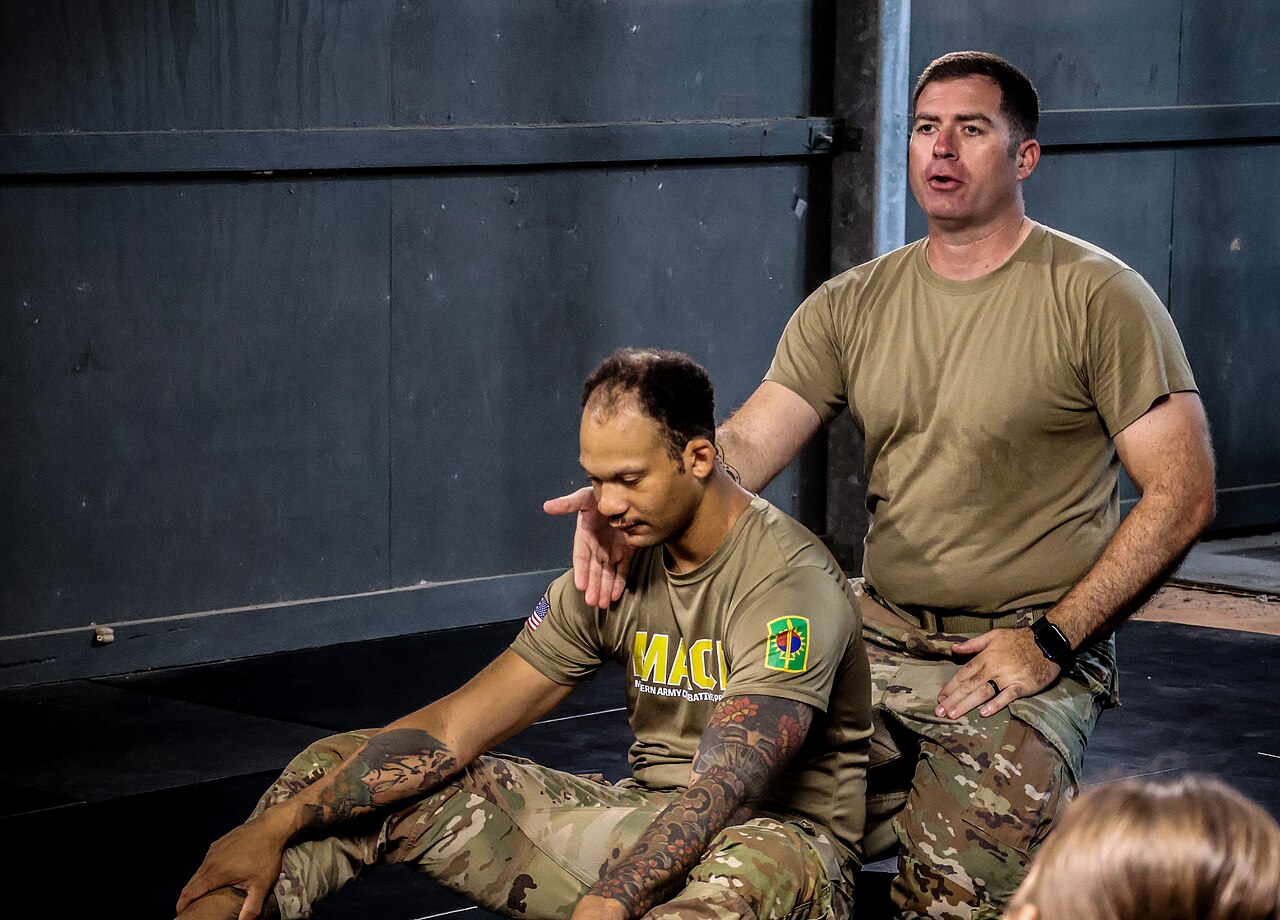
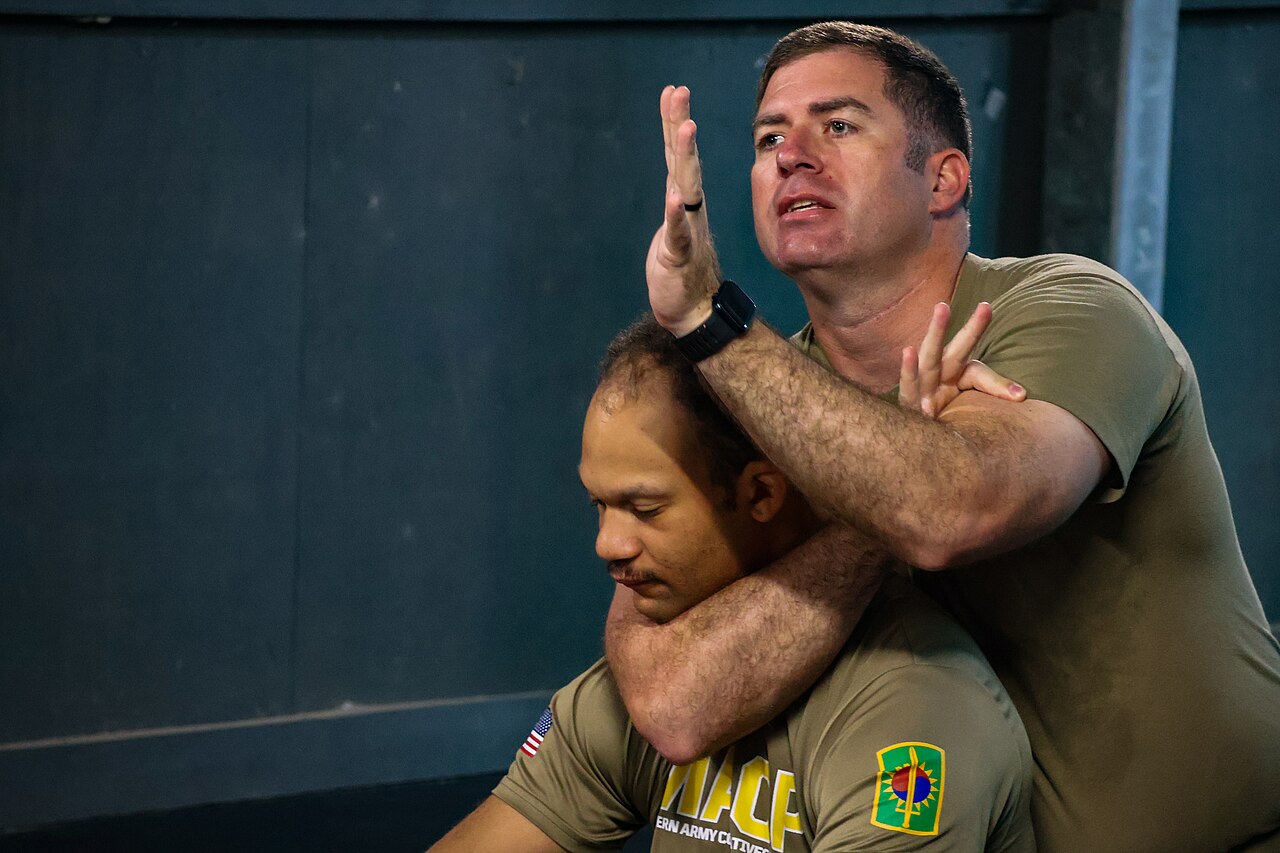
Combatives are close-quarters fighting methods designed for use by military personnel, law enforcement officers, security staff, and corrections officers. While they draw from martial arts, they are not considered separate, formal disciplines. In January 2008, the United States Modern Army Combatives Program became the foundation for the United States Air Force Combatives Program. Outside the military, combatives training has been offered in other settings, such as at Kansas State University, which ran a program for two and a half years before ending it in 2010.
- field
- Hand-to-hand combat systems
- used_by
- Military, law enforcement, security personnel, corrections officers
- based_on
- Martial arts
- notable_program
- United States Modern Army Combatives Program
- adopted_by
- United States Air Force Combatives Program (January 2008)
Lore & Background
Combatives are hand-to-hand combat systems used by members of the military and law enforcement, security personnel, and corrections officers. They are based in martial arts but are not distinct disciplines. The United States Modern Army Combatives Program was adopted as the basis for the United States Air Force Combatives Program in January 2008.
Reader's Guide
Combatives represent a practical approach to close-quarters combat, drawing from martial arts but tailored for professional use by military and law enforcement personnel. Their significance lies in providing standardized, effective techniques for unarmed and armed hand-to-hand situations. The adoption of the United States Modern Army Combatives Program by the Air Force in January 2008 highlights its institutional importance. Beyond the military, combatives training has been offered in civilian settings, such as Kansas State University, which ran a program for 2½ years before closing it in 2010. The legacy of combatives is reflected in related systems like Krav Maga, Sambo, and the Marine Corps Martial Arts Program, as well as historical manuals such as William E. Fairbairn's 'Get Tough!' and Rex Applegate's 'Kill or Get Killed.' These systems continue to influence modern close-combat training.
Did You Know?
- Combatives are based in martial arts but are not distinct disciplines.
- The United States Modern Army Combatives Program was adopted as the basis for the United States Air Force Combatives Program in January 2008.
- Kansas State University provided a combatives training programme for 2½ years before closing it in 2010.
- Combatives are used by military, law enforcement, security personnel, and corrections officers.
Defining the Discipline
Combatives occupy a unique space in the world of physical combat training. Rather than constituting a single, self-contained martial art, they function as hand-to-hand combat systems drawn from the broader family of martial arts while remaining deliberately distinct from any one discipline. This hybrid character is central to their identity: they borrow techniques and principles from established arts but reorganize them around the practical needs of those who must defend themselves or subdue opponents in high-stakes, real-world situations. The intended practitioners are not athletes or competitors; they are members of the military, law enforcement officers, security personnel, and corrections officers—individuals whose daily work may place them in close physical contact with hostile or uncooperative parties. Because combatives are not a standalone tradition with its own lineage, philosophy, or competitive circuit, they remain fluid and adaptable, shaped by the operational requirements of the institutions that adopt them rather than by the internal logic of a single school of thought.
Cross-Branch Standardization
One of the most concrete examples of how combatives programs spread across institutions is the January 2008 decision by the United States Air Force to adopt the Modern Army Combatives Program as the foundational framework for its own service-specific combatives curriculum. Rather than developing an entirely independent system from scratch, the Air Force looked to the Army's existing structure and built upon it, signaling a preference for proven, field-tested methodologies over reinvention. This cross-branch borrowing underscores a broader pattern in military training: when one service branch has already invested years in refining close-combat doctrine, sister services can accelerate their own readiness by adapting that work. The Army's program, in turn, had its own long institutional history, having evolved through multiple iterations of field manuals and training regulations over several decades. The fact that the Air Force chose to anchor its 2008 program in the Army's system rather than in the Marine Corps Martial Arts Program or another related combat system reflects both the Army's size and the institutional weight it carries in shaping U.S. military close-combat doctrine.
A Century of Field Manuals and Foundational Texts
The intellectual and practical backbone of combatives training has been documented in a remarkable series of publications spanning more than six decades. In 1942, William E. Fairbairn published Get Tough!, a slim volume detailing basic commando techniques for soldiers, while the War Department simultaneously issued FM 21-150, titled Unarmed Defense for the American Soldier. Rex Applegate's Kill or Get Killed, first released in 1943, went through multiple editions and was so widely circulated within the United States Marine Corps from 1991 onward that it received its own manual designation, FMFRP 12-80. The FM 21-150 series continued to be revised through 1954, 1963, 1971, 1992, and 2002, each edition reflecting updated tactical thinking. The Marine Corps maintained its own parallel lineage with FMFM 0-7 Close Combat in 1993 and MCRP 3-02B in 1999. Richard Strozzi-Heckler's In Search of the Warrior Spirit added a psychological and awareness dimension to Green Beret training, showing that combatives doctrine extended well beyond pure physical technique into the realm of mental preparation.
Civilian Training and the Wider Combat Ecosystem
Although combatives are primarily an institutional military and law-enforcement phenomenon, their reach has occasionally extended into civilian academic settings. Kansas State University, for instance, operated a combatives training programme for a period of two and a half years before discontinuing it in 2010, demonstrating that the appeal of structured close-combat instruction could cross into the university environment, even if such programs proved difficult to sustain outside the military's mandatory training infrastructure. Beyond this single civilian example, combatives exist within a much larger ecosystem of related hand-to-hand systems. The broader landscape includes the Marine Corps Martial Arts Program, Krav Maga, Sambo, Systema, the SPEAR System, the Special Combat Aggressive Reactionary System, Defendu, All-In Fighting, ARB, Jieitaikakutōjutsu, Junshi Sanda, and LINE. These systems share the common goal of practical close-range combat effectiveness but differ in origin, cultural context, and institutional sponsorship. The existence of bodies such as the International Close Combat Instructors Association further illustrates that the combatives world, while rooted in military service, has developed its own informal professional community and shared vocabulary.
Gallery
Frequently Asked Questions
What are Combatives in the U.S. martial arts context?
Combatives refers to a set of close-quarters fighting techniques tailored for military personnel, law enforcement officers, security staff, and corrections officers. Rather than being a standalone formal discipline, it borrows principles from various martial arts and adapts them for practical, real-world confrontations.
Who actually trains in Combatives?
The primary users are active-duty military members, police officers, security professionals, and corrections officers. The training is purpose-built for individuals who may face physical confrontations in the line of duty rather than for sport or self-defense in a civilian setting.
What is the U.S. Modern Army Combatives Program?
It is the foundational hand-to-hand combat system developed for the U.S. Army, emphasizing practical grappling, striking, and weapon-retention skills. In January 2008, the Air Force adopted this system as the basis for its own Combatives Program, extending the curriculum across another branch.
How does Combatives differ from a traditional martial art?
While it draws heavily on techniques from established martial arts, Combatives is not classified as its own formal discipline with a fixed kata or belt-structure lineage. Instead, it is a functional, mission-oriented toolkit that selects and blends useful elements for specific operational roles.
Has Combatives training ever been available outside the military?
Yes—Kansas State University, for example, ran a combatives program for about two and a half years before discontinuing it in 2010. Outside of such limited academic offerings, the system remains overwhelmingly tied to government and institutional security roles.
More in Martial arts in the United States 1-24
Spotted an error? Know more?
This is a living reference — every entry is fact-audited, and reader corrections feed straight into our audit queue. Suggest an edit · See this site's audit record