
Collegiate wrestling
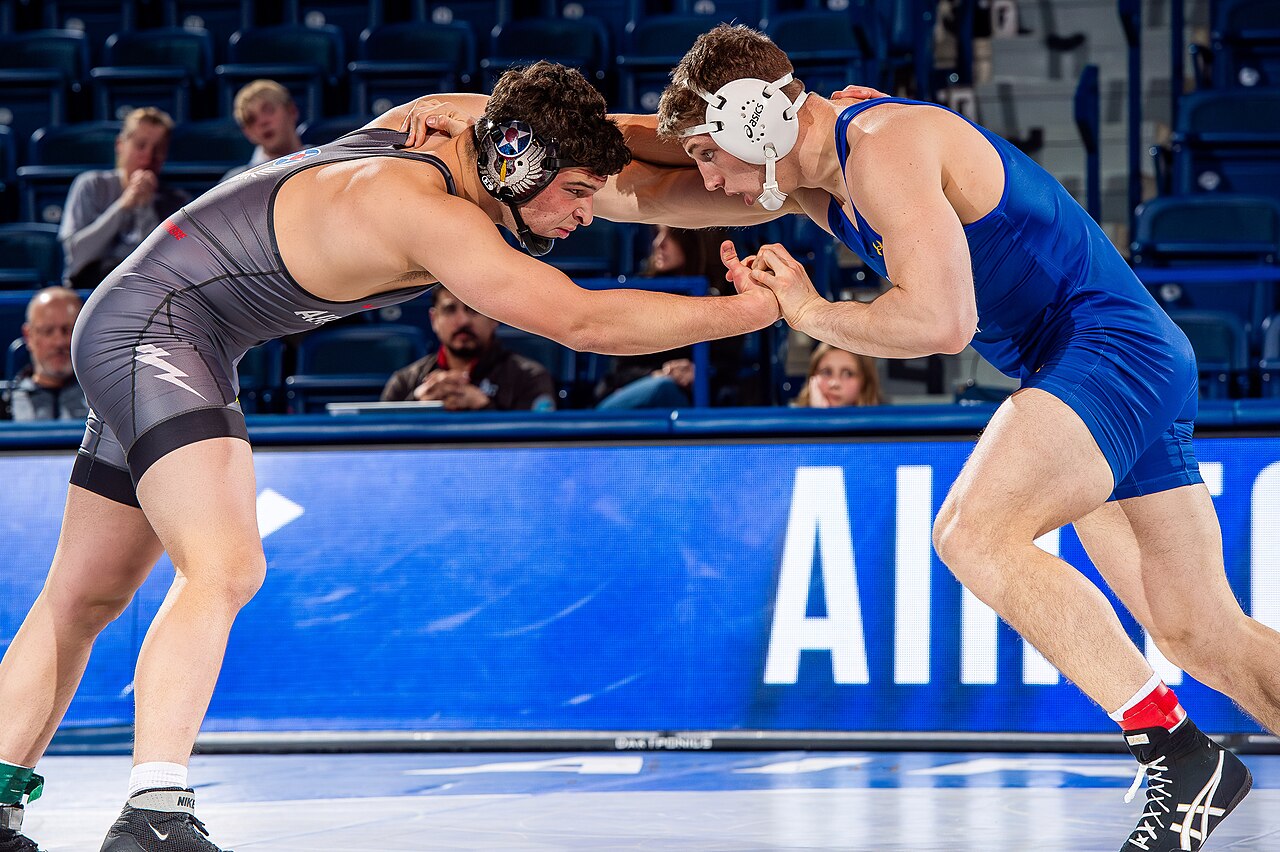
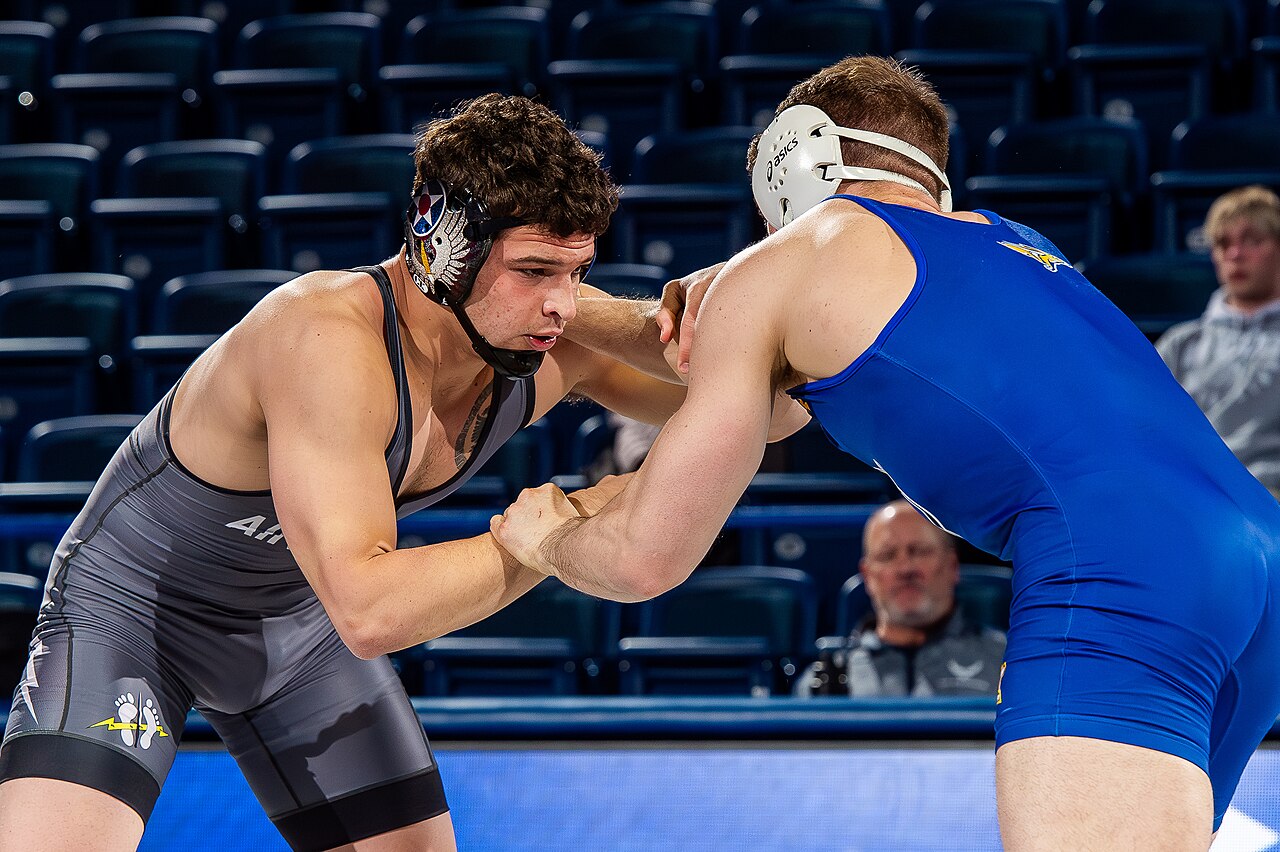
U.S. post-secondary wrestling emphasizing control over the opponent.

Wikipedia / Wikimedia Commons
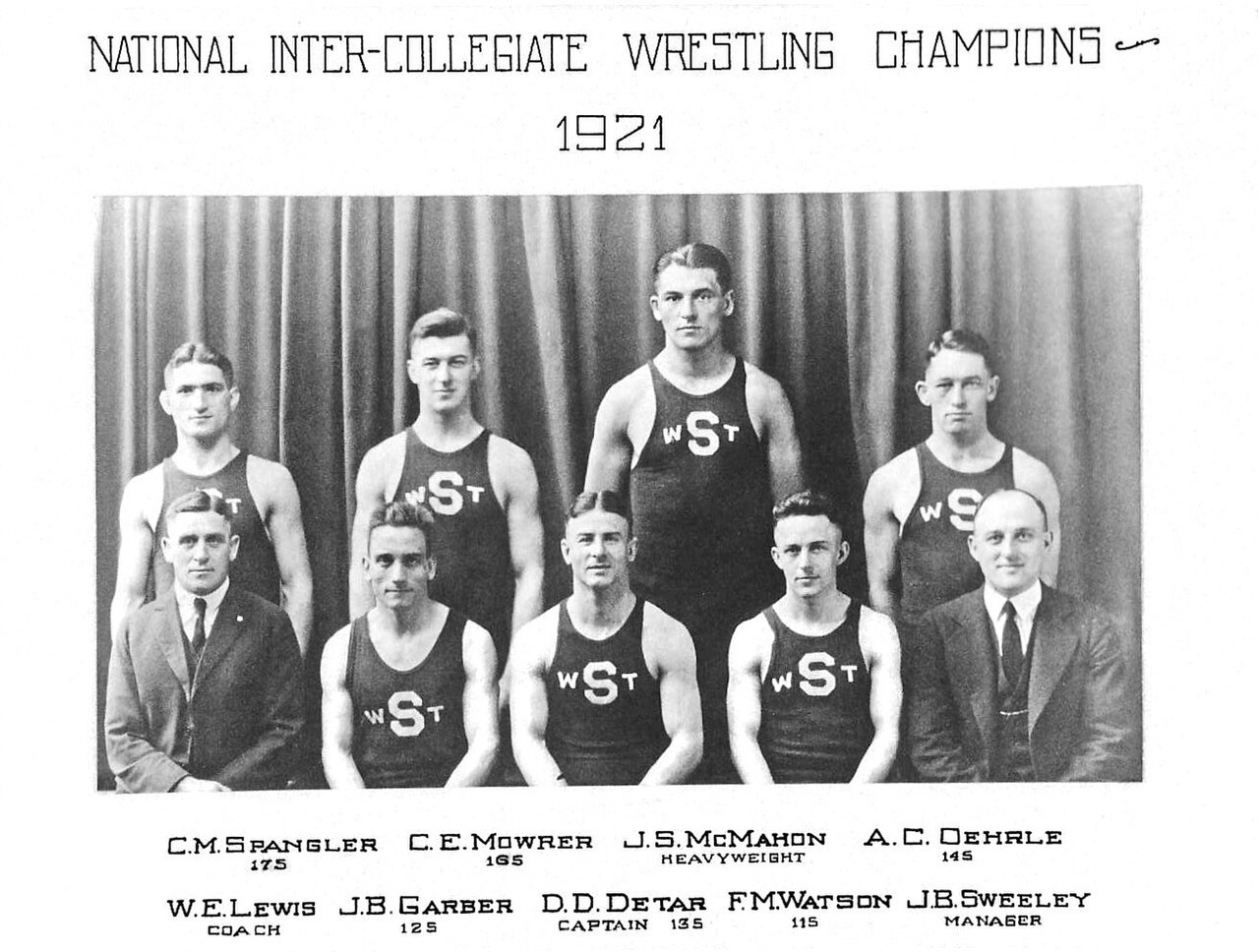
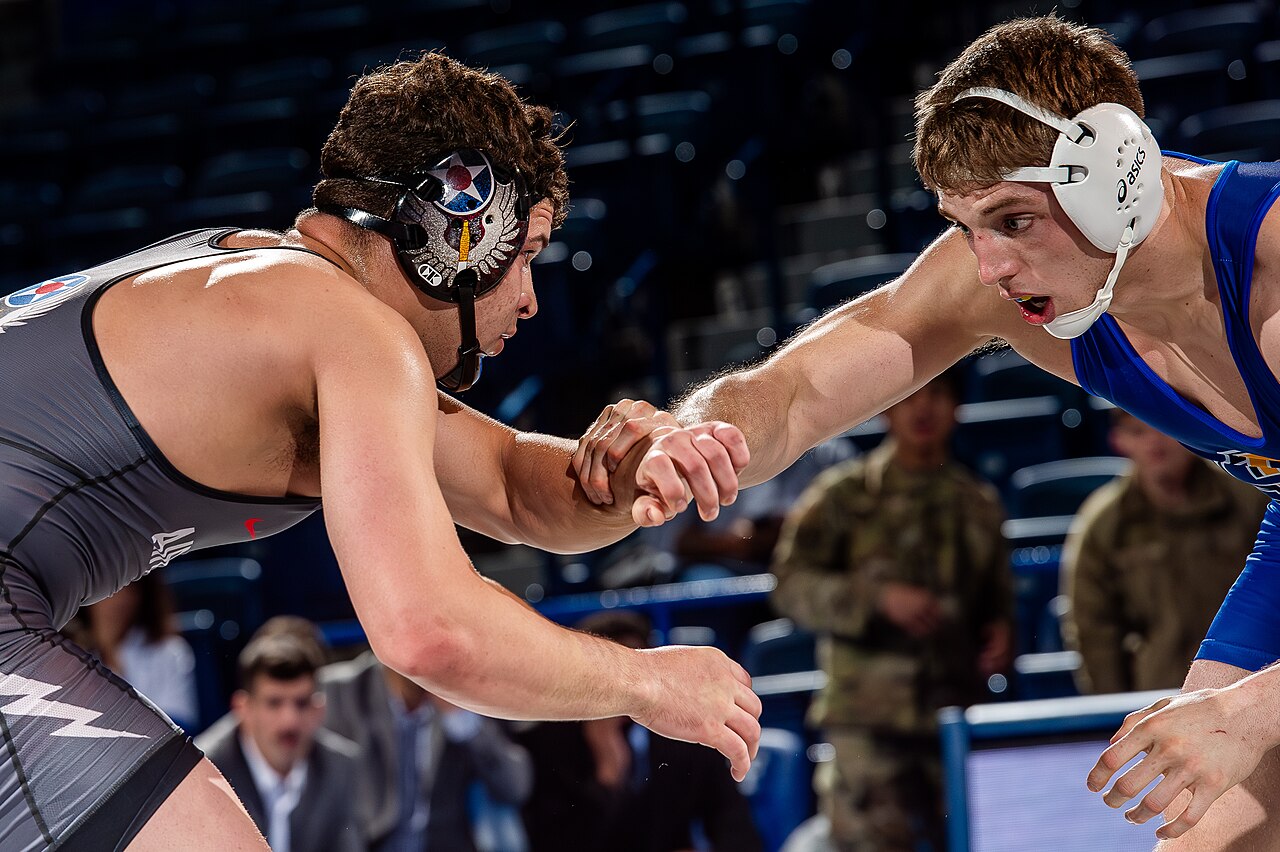
Collegiate wrestling, also called folkstyle wrestling, is the version of the sport practiced by men at U.S. colleges and universities. With some rule adjustments, it is also used at the high school, middle school, and elementary levels. This style differs from the Olympic disciplines of freestyle and Greco-Roman wrestling. Unlike Greco-Roman, both collegiate and freestyle wrestling allow wrestlers to use their own or their opponent’s legs for offense and defense. Collegiate wrestling programs exist in nearly every U.S. state, as well as at one Canadian university.
Women’s collegiate wrestling in the U.S. follows two different rule sets. The National Wrestling Coaches Association, whose women’s division is recognized by the NCAA as part of its Emerging Sports for Women program, uses freestyle rules as defined by United World Wrestling. The National Collegiate Wrestling Association, a separate governing body that runs college competitions outside the NCAA, uses collegiate rules for its women’s division. The organizations overseeing collegiate wrestling include NCAA Divisions I, II, and III, the NAIA, the NJCAA, the CCCAA, and the NCWA. Wrestling scholarships are available to student-athletes in NCAA Divisions I and II, the NAIA, and the NJCAA.
**Contrast with the international styles**
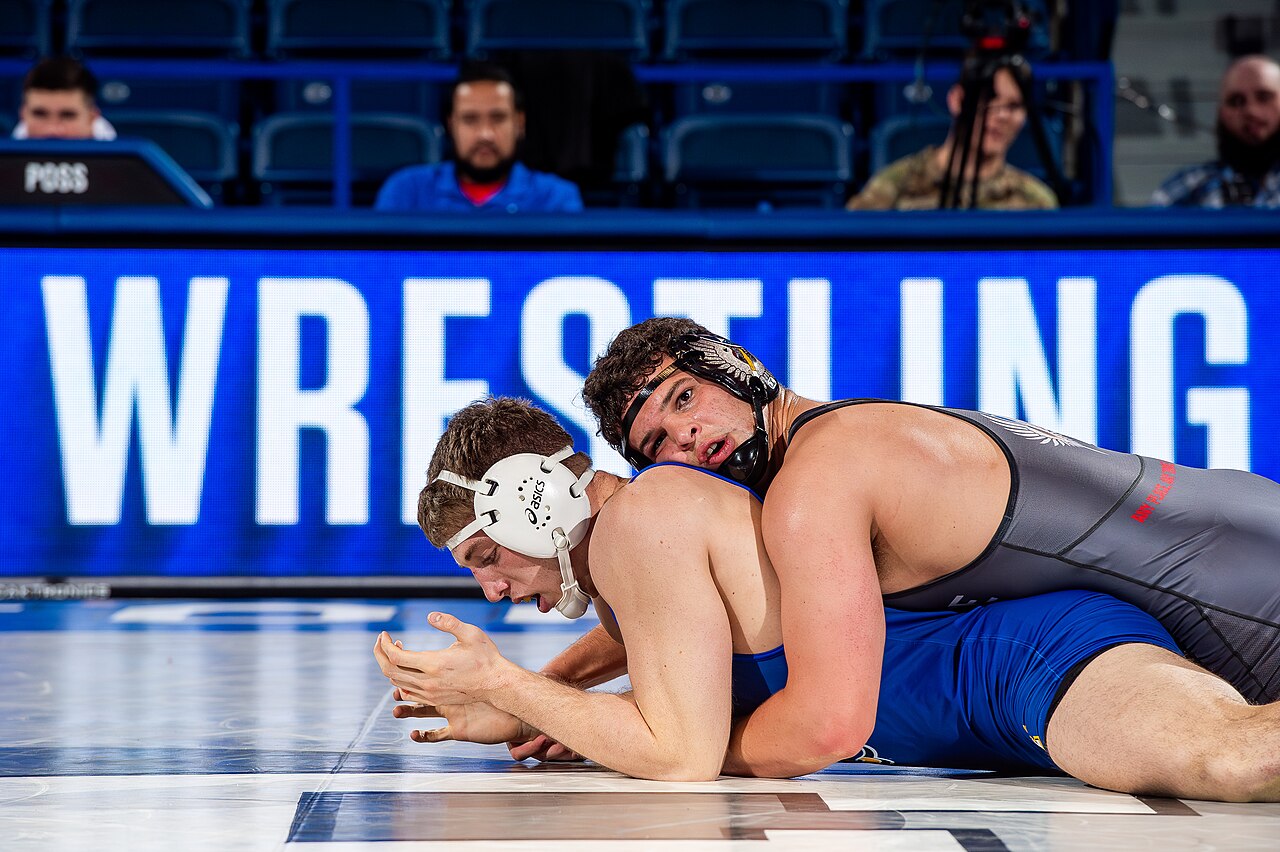
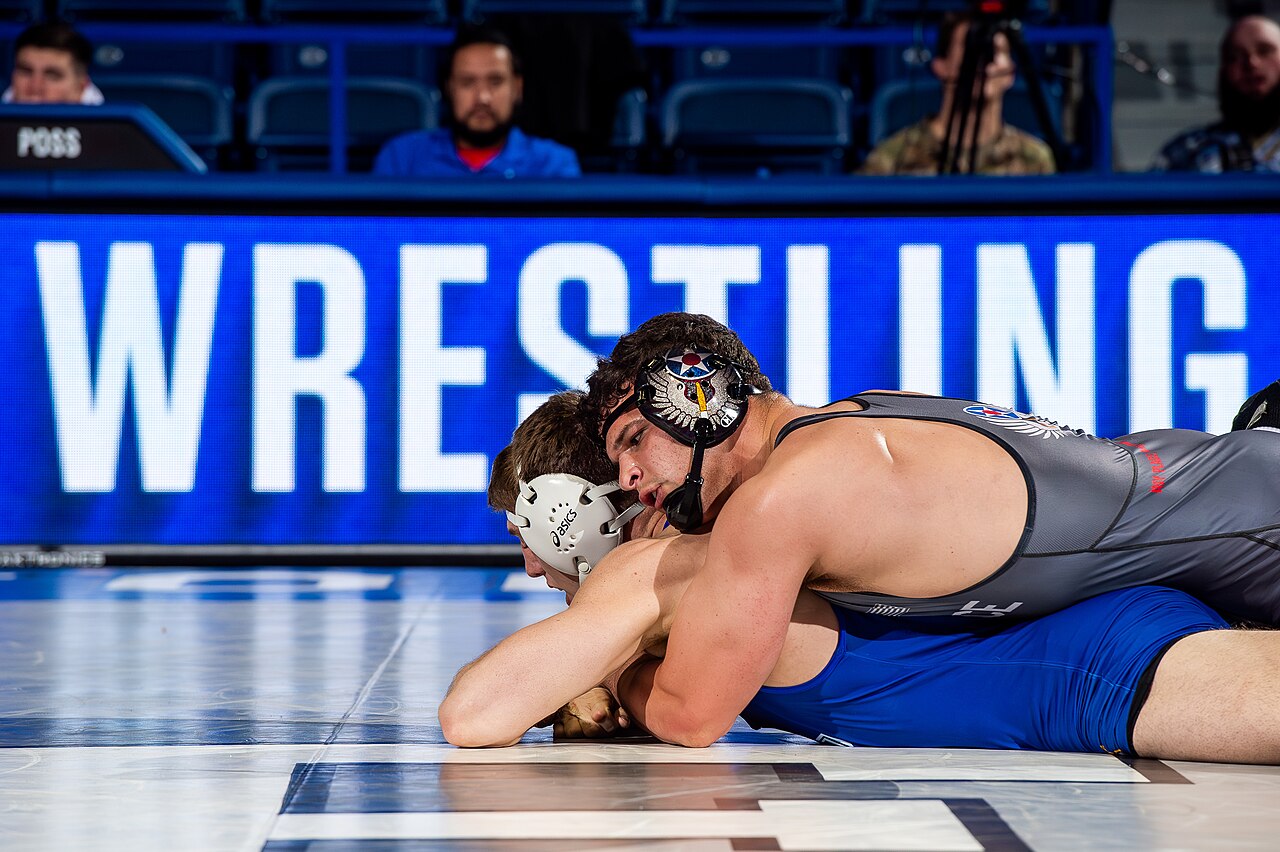
Collegiate wrestling differs from freestyle and Greco-Roman in several key ways. Scoring is one area of difference. In collegiate wrestling, a wrestler does not earn points simply for quickly exposing an opponent’s shoulders to the mat. Instead, to score “near fall” points, a wrestler must control one of the opponent’s shoulders on the mat while forcing the other shoulder to a 45-degree angle or less for two to five seconds. This reflects a broader difference in philosophy: international styles reward explosive action and risk, while collegiate wrestling emphasizes and rewards control over the opponent.
This focus on control has been present since the early days of the sport. Since 1915, officials have recorded the time each wrestler spends controlling an opponent on the mat, known as “time advantage” or “riding time.” Originally, this was the primary way to decide a winner if no fall occurred. Over time, its importance has diminished, and today time advantage is worth at most one point in college competition. As in the international styles, a wrestler can still win by pinni
- field
- Wrestling
- nationality
- United States (also one university in Canada)
- governing_bodies
- NCAA Divisions I, II, III; NAIA; NJCAA; CCCAA; NCWA
- key_difference
- Emphasis on control, near-fall points, and riding time
- women's_rulesets
- Freestyle (NWCA/NCAA Emerging Sport) and Collegiate (NCWA)
Lore & Background
Collegiate wrestling differs from freestyle and Greco-Roman in scoring and starting positions. For example, exposure points are not given for simply rotating an opponent's shoulders; instead, a wrestler must control one shoulder on the mat and force the other to a 45-degree angle for two to five seconds to earn near-fall points. This reflects the style's focus on dominance and control. Since 1915, officials have recorded riding time, though its significance has declined to a maximum of one point.
Reader's Guide
Collegiate wrestling has a distinct starting position after the first period called the referee's position, roughly analogous to the par terre position in international styles but used more frequently. Throws are de-emphasized; a legal throw earns the same points as any takedown, and some throws seen in international styles may be illegal. Instead, collegiate wrestlers typically seek to take an opponent down, perform a breakdown to flatten them, and then run pinning combinations. The defensive wrestler can escape, reverse, or bridge to avoid a fall. Women's collegiate wrestling uses two rulesets: the National Wrestling Coaches Association uses freestyle rules, while the National Collegiate Wrestling Association uses collegiate rules. Wrestling scholarships are offered in NCAA Divisions I and II, the NAIA, and the NJCAA.
Did You Know?
- Collegiate wrestling is also practiced at high school, middle school, and elementary levels with modifications.
- Riding time has been recorded since 1915 but now counts for only one point at most.
- Women's collegiate wrestling uses either freestyle or collegiate rules depending on the governing body.
- Some throws from international styles, such as a full-back suplex from a rear standing position, may be illegal in collegiate wrestling.
Taxonomy and Lineage of Wrestling Styles
The world of wrestling encompasses a vast array of distinct styles and schools, each carrying its own identity and heritage. These traditions do not emerge in a vacuum; they are often born from the vision of a single teacher or master who codifies a particular approach, or they take shape as a branded program developed within a specific gym or institution. Because of this diversity, practitioners and scholars face the challenge of organizing such a wide field into something coherent. Two primary methods of classification exist: grouping styles by their technical focus or type, and grouping them by the region where they originated. While both approaches have merit, the regional framework has proven particularly useful for mapping the global landscape of wrestling. It allows observers to trace how geographic, cultural, and historical forces shaped the techniques and philosophies that define each tradition, from the grappling systems of one continent to the distinctly different approaches found on another. This regional lens reveals that what we call wrestling is not a monolith but a constellation of locally rooted practices that share a common thread of human-to-human grappling.
The Blurred Line Between Traditional and Modern
One of the most persistent debates in the wrestling and broader martial arts world is where to draw the boundary between what is considered traditional and what is considered modern. The answer, as it turns out, resists simple chronological sorting. Hybrid martial arts, which blend techniques from multiple lineages, began appearing in meaningful numbers from the late nineteenth century onward and exploded in popularity after 1950. Because these hybrid systems draw from so many sources, pinning them to a single regional origin is often impossible. The complication deepens when we examine specific examples: Taekwondo, widely regarded as a traditional art, was not developed until the 1950s, whereas Bartitsu, a hybrid system combining elements from several disciplines, was assembled around 1900. In other words, a system that is older on the calendar can be labeled modern while a younger one carries the traditional tag. This inversion makes it clear that age alone cannot serve as the deciding criterion, and that the traditional-versus-modern distinction in wrestling and related grappling arts is far more nuanced than a simple timeline would suggest.
From Folk Tradition to Regulated Sport
A significant share of what we classify as traditional martial arts falls squarely into the category of folk wrestling, a broad family of grappling practices that developed organically within local communities over generations. These folk styles were never designed as competitive sports; they grew out of cultural rituals, practical self-defense needs, or communal gatherings. However, as the twentieth century progressed, many of these grassroots traditions were formalized into regulated combat sports with codified rules, weight classes, and standardized scoring. The result is a fascinating overlap: in some cases, a folk wrestling style and a modern regulated combat sport share so many technical and structural similarities that they become virtually indistinguishable from one another. The line between the village tradition and the arena competition blurs, especially once officials impose uniform regulations on what was once a free-form, locally governed practice. This convergence means that a wrestler competing in a sanctioned tournament may be performing techniques that are, at their root, centuries-old folk expressions, now channeled through a modern competitive framework.
A Global Landscape of Wrestling Traditions
When we map the full spectrum of wrestling and grappling traditions, the picture that emerges is one of extraordinary geographic diversity. Styles and schools are found across every inhabited continent: in Africa, across the many nations of Europe, throughout the vast and varied regions of Asia, in the islands and territories of Oceania, and in both North and South America. This global spread underscores why regional origin has become one of the most meaningful ways to organize and understand the field. Each area has produced its own distinctive approaches to body control, leverage, and takedown, shaped by local culture, available training environments, and historical circumstances. The sheer number of distinct styles means that no single regional tradition can claim to represent the whole of wrestling. Instead, the global landscape is a mosaic, with each region contributing its own piece. For anyone studying collegiate wrestling or the broader grappling arts, recognizing this diversity is essential, because it reminds us that the techniques seen on the mat today are the product of countless local innovations that have traveled, merged, and evolved across borders and centuries.
Gallery
Frequently Asked Questions
What is collegiate wrestling?
Collegiate wrestling, commonly called folkstyle, is the wrestling format competed at American colleges and universities, though the same rules are adapted for high school, middle school, and even elementary competition. It is a distinct style separate from the two Olympic disciplines of freestyle and Greco-Roman.
How does collegiate wrestling differ from Olympic freestyle and Greco-Roman?
The key structural difference is that Greco-Roman forbids any use of the legs, while both collegiate and freestyle let wrestlers attack and defend with their own or their opponent's legs. Collegiate also places a heavier emphasis on control, near-fall points, and riding time compared to the Olympic styles.
What organizations govern collegiate wrestling in the U.S.?
Depending on the level of competition, the sport falls under NCAA Divisions I, II, and III, the NAIA, the NJCAA, and the CCCAA. The NCWA specifically oversees the women's collegiate wrestling circuit.
Where can someone compete in collegiate wrestling?
Programs exist in nearly every state across the United States, making it one of the most geographically widespread collegiate sports in the country. A single Canadian university also fields a collegiate wrestling team.
What makes women's collegiate wrestling unique compared to the men's version?
Women's collegiate wrestling places a stronger emphasis on maintaining control over the opponent, earning near-fall points, and accumulating riding time. It can be competed under either the freestyle ruleset (governed by the NWCA and listed as an NCAA Emerging Sport) or the dedicated collegiate ruleset overseen by the NCWA.
More in Martial arts in the United States 1-24
Spotted an error? Know more?
This is a living reference — every entry is fact-audited, and reader corrections feed straight into our audit queue. Suggest an edit · See this site's audit record